Published 4/6/26
The Unholy City
Part II

IX. The Third Temptation
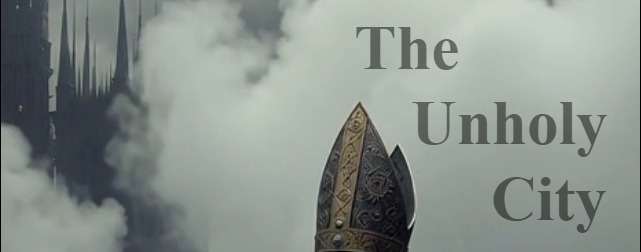
On a hill overlooking the City, we stand and marvel at its splendor and power, its extent and beauty, its depth and strength. It reaches into every domain of man. It holds the key to every kingdom. And now the City’s proposal comes to us, “All this I will give to you if you bow down and worship me.” The offer has been made before.
In the account of the temptations of Jesus by the devil in the wilderness, the first two temptations, turning stones into bread and casting Himself off the temple to be saved by angels, were dealt with firmly and calmly, by Jesus quoting verses from Deuteronomy. The third temptation, in Matthew’s telling, was different. The devil proposed to grant Jesus authority over all He surveyed from the top of a high mountain, including “all the kingdoms of the world and their splendor”, if only Jesus would bow down and worship him. This proposal aroused Jesus’ anger, and He immediately ordered Satan to depart. It is not hard to figure out why Jesus was angered. The other two temptations were comparatively simple and direct (“Prove you are the son of God”), but this one involved violating the single most important organizing principle of the cosmos—to deny God the exclusive worship He commands. Jesus would not stand for even the suggestion in His presence. It certainly makes sense.
I have sometimes wondered about the legitimacy of Satan’s proposal. Of course, the devil is a liar, and there is no reason to think that all the kingdoms of the world were within his authority to give. It probably doesn’t matter, anyway. But the Bible has many characterizations of Satan: the prince of this world, the adversary, prince of the kingdom of the air, the evil one, the tempter, the god of this age, and so on, each of which suggest very far-reaching powers. Today, through the City, which he rules among many other domains, the devil exercises vast authority.
It may seem strange to introduce specifically Christian theology into a discussion of the cultural aspects of social and technological change, usually seen as a purely secular concern. The reason is simple. Only a Christian worldview is robust enough to fully critique and comprehend the pathologies being explored. When values are being eroded and replaced, it touches the foundations of human telos, the purpose for our existence. When that erosion prepares the way for a new foundation for human ontology, there is no secular answer for it.
For one to see this, the last illusions of technological neutrality and progressive inevitability must be stripped away. It is true that the human movement behind the City’s development is not a cabal of technicians conspiring to take away yet another freedom or dignity of man. They are like you and me, working for a living and producing what the market wants, what all the incentives point to, and what increased productivity and growth demand.
What the market demands in this age is constant stimulation, entertainment, and affirmation—an anesthetic against hard reality. What has been delivered is oppression that feels like freedom, chains called “choices”, and surveillance and control justified as “safety” and “care”. This infantilization is being received as deliverance. It excludes God our Father, and indeed all transcendental values. Ultimately, it makes man into a new kind of being—utilitarian, material, without spirit, without ultimate purpose, without value, a slave. It is the first step towards the dilution and degradation of the imago Dei—the Image of God in which all humanity is created—which distinguishes us from all other creatures and constitutes our dignity, purpose, and capacity for relationship with our Creator and with other bearers of the Image. The Christian worldview alone enables one to see and understand the full vision of the Unholy City. This is no abstraction: we have only to look at what people actually do with their time.
The time that people devote to the City is emblematic of an underlying and growing belief that the City’s services can save them (from ignorance, boredom, uncomfortable truth, responsibility, hard decisions, economic hardship, and so on). Whatever power or process that people believe will save them, they worship; that is, they give it their time, attention, trust, and devotion.
The third temptation was not for Jesus alone. It is offered to us, every day, every moment.
Jesus said to him, “Away from me, Satan! For it is written: ‘Worship the Lord your God, and serve him only.’”—Matthew 4:10 (NIV)
The Unholy City is licensed in its entirety under CC BY-NC-ND 4.0.
To view a copy of this license, visit
https://creativecommons.org/licenses/by-nc-nd/4.0/