Published 2/20/26
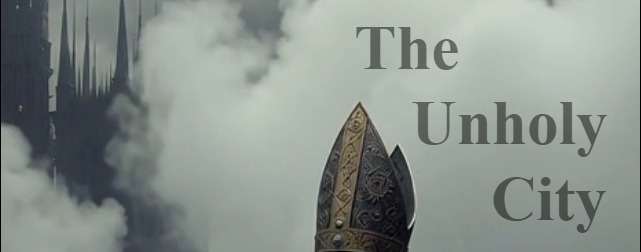
The Unholy City
[from 2026]
Postscript
So I thought and wrote then, and so I think now, with this difference: then, I saw the City, emerging on the horizon; now, I write from within the City.
Thank you for sticking with me through the past observations from twenty-five years ago. They have some value because they contextualize what we see in the present era of technology and culture. By measuring what was emerging then to what is matured and still growing today, we can understand the direction and the intent behind it far better than if we simply studied a snapshot of today.
For the City whose foundations were being built twenty-five years ago is now fully up and running. Of course, this is just the first version of it. But the architecture is clearly visible, the domain is secure, and the direction of growth is evident and fixed. The movement that has produced the City is inexorable, it is destiny, and no force imaginable from within the City can alter its course.
So, we are forced to consider an unimaginable force, a force from outside the City and its influence. The first step towards that goal is to name the evil. That is the purpose of this book and the goal of all the arguments presented. If the outlook presented here seems grim or discouraging, it is because nothing less than stripping away the glitter and lights, so that we can make an honest and frank appraisal of nature of the City, will force us to return to first principles.
Let’s begin with a walk around the City, to see what we can see, to observe how the trends that were visible twenty-five years ago have matured, to note the trajectories of the movements and see where they have landed today. We shall look at a succession of subjects:
I. A Matter of Choice
II. The Illusion of Freedom
III. In the Affirmative
IV. The Nudge Factory
V. Storming the Aggregates
VI. The Chronocide Institute
VII. The Ruined Tenth
VIII. No Exit
IX. The Third Temptation
X. The Masterpiece of Objectification: AI
XI. The Tyranny of the Subjective
Beyond these topics, there are many more implications to be drawn from the City’s architecture and evident aims to be explored.Before going further, I want to disarm one rather obvious critique: many will insist that the essays overlook the good things that technology can do or has already delivered. First, that aspect of progress in technology never needs boosting; the benefits are obvious, I don’t deny, and trumpeted from every portal. They are the bright, shiny new objects that attract and capture our attention—that is why the costs need critical examination. Secondly, this is exactly how temptation works: the thing being offered has manifest benefits but concealed within are snares that need exposing. For,
...what is a man profited, if he shall gain the whole world, and lose his own soul? —Matt. 16:26a (AV)
Previous Table of Contents Next
© Copyright, 2001, 2003, 2026, by Robert McAnally Adams.
The Unholy City is licensed in its entirety under CC BY-NC-ND 4.0.
To view a copy of this license, visit
https://creativecommons.org/licenses/by-nc-nd/4.0/