Published 1/9/26
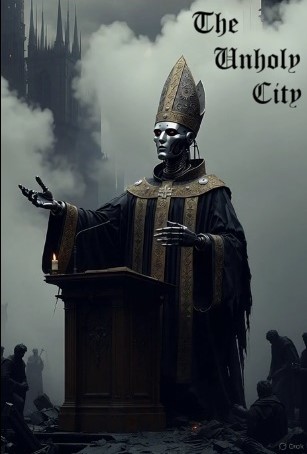
The Unholy City
Preface
I believe there are many people who are uneasy about the current technological and cultural world, who wonder, What’s missing, What’s gone wrong? Why do things just not feel right? Why is there a sense of captivity, of the erosion of personhood, of the hollowing out of love and truth? Their sense of unease about how much their world has changed and the way it has changed is understandable, and though they may not realize it, shared by many others. We are more connected than at any time in history—why does it feel like isolation? We have access to the most sophisticated and comprehensive scientific, historical, and cultural knowledge-base that has ever existed—why does it not feel like wisdom? We enjoy the greatest security, prosperity, and convenience of any civilization in history—why does it feel like the knife-edge of disaster? Why are loneliness, foolishness, and anxiety rising at alarming rates?
If you are asking yourself those questions and other related ones, I want to assure you that you are not alone. People of all persuasions are starting to ask these questions. I want to propose some answers to those questions, answers that are generally not to be found in the media, in popular discourse, in the more common religious dialog, or typically in the circle of one’s friends and acquaintances. Our reflex in social settings is to put on a happy face and pretend we are not troubled by doubts. It’s not dishonest; it’s self-protective, a way of blending in so as not to be found out as delusional or a nut-job.
Be assured, you are not imagining things. There are forces visibly at work today that human beings have not encountered before, at least not in this form. The conflict is spiritual.
Accordingly, what follows begins the serialization of a book-length discussion of technology and culture from a Christian theological perspective, one that examines the technology, the culture, and the spiritual implications carefully and seriously. It tells an admittedly grim story, but not without hope. I welcome comments and conversation, because the issues being raised here touch the most fundamental concerns of life, transcending economics, politics, national identity, social concerns, and many of the other matters that compete for our daily attention, both as individuals and as a people. It is understandable that, as an American, I necessarily write from an identifiably American perspective. But, while the views expressed within may to some extent rest on distinctly American experiences, examples, and institutions, I believe that they ultimately touch the human condition—transcend national and cultural boundaries to speak to everyone, everywhere.
To begin the discussion, I recapitulate two essays written 25 years ago as the foundation for developing a thesis on technology and culture, citing the beginnings of many trends that could be seen then and connecting them to their mature manifestation in the present. I ask the reader to be patient, to examine carefully the way the world looked then, and to consider soberly where those trends have led us today. Some of the positions expressed here may be sharply controversial. If the reader finds them so, let’s engage the issues together and find language that expresses our true situation.
So, we begin.
When “The Unholy City” (2001) and “When Choice is Unfree” (2003) were written a quarter century ago, they were conceived in a season of both hope and foreboding. At that time, the world still believed the Internet would make us free. Technology promised liberation: communication without borders, commerce without friction, information without ignorance. Yet beneath that optimism already stirred another vision—one of captivity disguised as connection, of appetites trained to serve unseen masters. These essays were written in that dawn, before social media, before surveillance capitalism, before artificial intelligence, before we even had names for the elements of the media culture.
I am presenting these essays to you now because they identified important trajectories before the trends had matured. The essays are evidence that the trajectories were visible 25 years ago. Since then, many of those trends have matured and come to dominate the skylines of our world.
The implications of the observations in “The Unholy City” and “When Choice is Unfree” and conclusions are summed up in the chapters to follow. Twenty-five years ago, these essays warned of the City to come. Today, they speak from within its walls.
Table of Contents Next
© Copyright, 2001, 2003, 2026, by Robert McAnally Adams.
The Unholy City is licensed in its entirety under CC BY-NC-ND 4.0.
To view a copy of this license, visit
https://creativecommons.org/licenses/by-nc-nd/4.0/